
Food Insecurity: The Growing Crisis in America
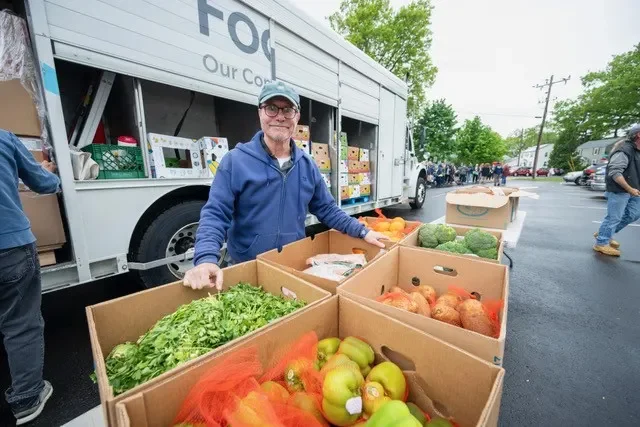
Earlier this year, over $1 billion in funding cuts resulted from the federal government ending two local purchasing programs: the Local Food Purchase Assistance (LFPA) and Local Food for Schools (LFS). In addition, the USDA halted $500M for The Emergency Food Assistance Program (TEFAP). These programs have been lifelines for food banks and community nonprofits — funding local food purchases, supporting farmers, and providing emergency food aid across the country.
Nationally and locally, these cuts have left food banks with fewer resources, even as demand surges.
Across the country, people experiencing hunger are navigating an affordability crisis that has pushed food insecurity to its highest level in nearly a decade. Access to healthy, nutritious food has eroded, leaving more individuals vulnerable to both mental health challenges (such as anxiety and stress) and physical conditions (including diabetes, heart disease, and high blood pressure).
“Currently 1 in 6 of Connecticut children are facing food insecurity. ”
On November 1, millions of low-income Americans suddenly lost access to SNAP benefits, exponentially increasing the need for food support. Under SNAP, which serves more than 42 million people, families receive an average of $187.20 per month to pay for groceries.
For perspective: SNAP provides nine meals for every one meal local food banks distribute. When SNAP benefits are reduced, food banks and pantries face overwhelming new demand. Compounding the crisis, the federal government shutdown has left thousands of federal employees unpaid and newly requiring food support.
Amid growing economic uncertainty, reductions to the Supplemental Nutrition Assistance Program (SNAP) and other essential benefits are exponentially increasing the need for food overall. Food banks are being forced to serve far more people with far fewer resources, compounding the problem and making it unsustainable in the long term.
Connecticut’s Hunger Safety Net Is Failing — Let’s Fix It
In Connecticut, the funding loss has been particularly severe, with more than $9 million in federal food-related funding canceled statewide. The Connecticut Department of Agriculture lost $3.7 million in LFPA support.
Connecticut Foodshare — serving 600+ pantries, meal programs, and mobile food pantries statewide in CT — lost funding for its Farm to Neighbor program when the LFPA ended, which had enabled food banks to purchase from local farmers and distribute fresh produce to pantries — a win for families, farmers, and communities alike. Soon after, TEFAP deliveries were halted, costing Connecticut Foodshare 35 trailer loads of food. The combined loss: $2.7 million in essential resources.
Even amid hardship, communities continue to organize, advocate, and support one another — demonstrating resilience and self-determination in the shared effort to end hunger. Like many nonprofits, Connecticut Foodshare is working urgently to close this funding gap. The current strain and ever-evolving landscape threatens their ability to best meet the rising needs of communities.
Temporary stopgap state funds cover only a small percentage of what was requested and are restricted to food purchases only, leaving no support for critical infrastructure — warehousing, refrigeration, electricity, fuel, certified drivers, and distribution logistics.
Compared to the peak of COVID-19, Connecticut Foodshare leaders say this moment is “so much worse.” During the pandemic, there was a safety net of federal, state, and philanthropic aid. “Today, that safety net is gone. Lines are longer now — and growing. We are only at the beginning of this problem,” says Jason Jakubowski, President and CEO of Connecticut FoodShare.
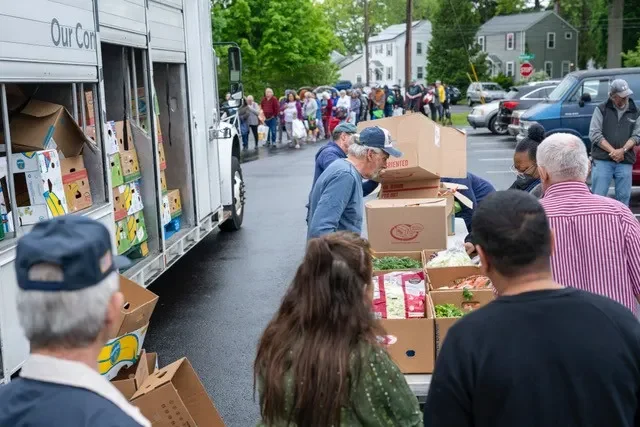
“Lines are longer now — and growing. We are only at the beginning of this problem.”
Why This Matters — Stable Households, Stronger Communities
Supporting food security does far more than filling plates — it strengthens entire communities. Stable households create engaged workers, consumers, and neighbors, fueling local economies and civic life.
Jakubowski says, “Currently 1 in 6 of Connecticut children are facing food insecurity. We want to ensure that every child has access to healthy food, a basic need that can help our neighbors thrive for years to come.”
When families face hunger, the effects cascade and result in:
Higher truancy among children
Lower literacy and graduation rates
Greater risk of housing, health, and employment crises
Without intervention, food insecurity today becomes community instability tomorrow.